Web hosting in China is often misunderstood if you’re new to the topic. This guide takes you through everything you need to know about China web hosting, including the concept of China VPN and ICP License. We’ll touch on common questions like internet speed, legality, whether or not you need an ICP License, and whether it’s worth the wait to get it. We also talk about the Great Firewall and recent regulatory changes.
Hosting in China isn’t mandatory, but there are benefits
You’re not obligated to host your website in China. You can have it running from outside the country, then add a translation service. However, websites that run outside China tend to load slower compared to those within the Great Firewall — an all encompassing expression for the legislative mandates and technological tools that aim to regulate China’s domestic Internet usage.
The load speed difference between internally-hosted websites and their external counterparts could go as much as 10 seconds though this number depends largely on the quality of the CDN you are using. However, the average consumer is not as patient as you might imagine. The lag is strong enough to put a dent in your conversion rates.
Pros of hosting in China include:
Hosting your site abroad can slow down loading speed. Your ranking on Baidu significantly reduces as this leading Chinese search engine favors local domains and local hosting. And of course the slow site speed will turn off most visitors. The concept of the Great Firewall generally plays a role in making sites hosted overseas load slowly. You can conduct a quick China website speed test by visiting a site using a VPN (to bypass the firewall) and without one. The difference in speed will be apparent.
China regulates what users can access within the country. As a result, most people assume that keeping off illegal or politically sensitive topics is enough to keep their website running.
However, you may not be in control as much as you might assume. Hosting outside may mean your website shares the same server as another site banned by the government. There have been different cases where “innocent” websites got banned because they were on a blacklisted server. Such risks do not occur if you are hosted in China because of the close monitoring of local ISPs.
- Effective geo-targeting
Search engines like Google and Bing have evolved to assign less weight to a site’s physical location, unlike in the past. However, the Chinese have a strong preference for Baidu, and this search engine’s algorithm is a couple of years behind search engines like Google. Then again, Google can’t even be accessed from China due to blocking by the Great Firewall.
As a result, getting a China domain name (.cn or .com.cn) and a local IP address can generally cause your site to rank higher than foreign ones. Most technical experts still differ on the extent to which a local domain name affects Baidu search results, but the reality is that it makes a difference.
While there are pros to hosting in China, there are some cons:
- Difficulty obtaining an ICP license
- The doubts surrounding the value of the .cn license
- Customer support service by local ISPs can be slow or difficult to reach.
What you should know about the ICP License

An Internet Content Provider (ICP) license is a crucial requirement for operating a mainland China website.
Generally, two forms of ICP license are involved:
1. ICP Filing
General content providers need to obtain this license. For instance, individuals who run their website mainly for informational purposes and do not have any direct selling engagement. In other words, even for non-commercial sites, you still need filing though such permits are rarely granted to foreigners.
2. ICP commercial
The license allows you to operate an e-commerce website in China. You need to apply for it if your website’s primary objective is to make revenue. You need the license if you generate income from online engagement, including:
- Advertising
- Selling online products
- Receives payment through the platform
Before starting the application process for this license, evaluate the following factors:
1. The entity’s legal status in China
The license is only issued to domestic companies or joint ventures with at least 50 percent domestic stake. However, this rule does not affect wholly foreign-owned enterprise (WFOE) e-commerce companies. The previous RMB 1 million capital threshold has been abolished, so be wary of any party that demand such requirements.
2. Website hosting
Websites hosted outside mainland China do not have to apply for this license. We have already tackled the disadvantage of operating a website outside the country.
For those hosting their website within China, you need the ICP license. As previously mentioned, the type of permit required depends on whether it is a revenue-generating website or is meant for informational purposes only.
3. Documents required
Below are the documents required when applying for the ICP license:
- Copy of business license of the Chinese entity.
- Photo ID of the business owner (does not matter whether local or foreign owner).
- Contact person’s ID card copy (must be a Chinese national)
- Properly and completely filled ICP application forms.
- Business development plan.
- Proof of capital required to execute the business activities.
- Company’s audited financial reports.
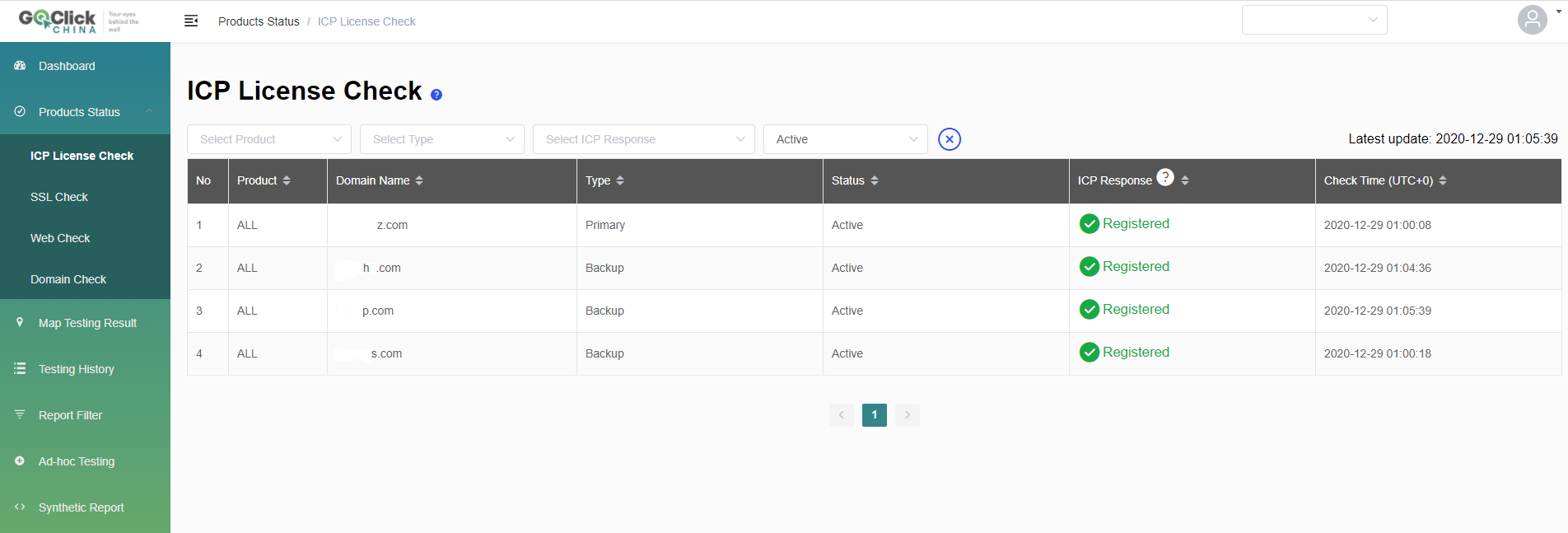
The ICP license is granted by the Ministry of Industry and Information Technology (MIIT). If you’re overwhelmed by the process, there are many consultancies that help businesses obtain their license. Work with a trusted and experienced one to avoid errors in your application.
China hosting and the EDI License
The Electronic Data Interchange (EDI) License is required by websites or platforms that offer transaction processing services and process online user data.
The license covers a wide range of businesses, including:
- Second-hand trading sites
- Ecommerce platforms
- Ticket booking systems
- Online food ordering websites/apps
Please note that the EDI license may not always be a requirement for all e-commerce platforms. In some cases, an ICP filing may suffice.
You need to satisfy several requirements when applying for the EDI license:
- Business registration certificate under the scope of “telecommunications” or related description
- A legal representative of the entity (must be of Chinese nationality)
- Physical server located in the same location as the legal entity
- At least 10 Chinese employees in specific roles/positions (Staffing rules vary by province but are generally flexible.)
- Social security payment records for at least three Chinese employees (Staffing rules vary by province but are generally flexible.)
- Cybersecurity department and well-developed internal regulations
- Check your local province for a list of required documents for proof of experience in e-commerce, mode of a business transaction description, and app.
The EDI license is applied at the local telecommunications authority, and the actual documents submitted for application may vary based on the local authorities. These documents are presented in Chinese.
Apart from the ICP License, what else is needed for successful web hosting in China?
You also need to look into the technical aspect, just as you would do anywhere else.
For successful China web hosting, consider these other factors:
- Clear definition of your needs
Each company has unique needs and how they want to make use of their website. Take the time to evaluate your needs as you go digital in China. Would you like to display your products and services, or engage in e-commerce activities?
- Major web hosting companies in China to consider
Consider working with one of the top 10 web hosting companies in China.
- Alibaba Cloud
- Tencent Cloud
- Huawei Cloud
- Baidu AI Cloud
- UCloud
- China Telecom
- West.cn
- Xinnet
- 35.COM
- Sinohosting.net
- Connectivity
The Chinese network is split amongst three leading telecom providers, China Mobile, China Unicom, and China Telecom, due to the country’s massive size. The three networks have a history of not allowing interoperability amongst their systems.
Additionally, each provider tends to dominate specific regions. Thus, you may face slight limitations when targeting China Unicom-based customers from a China Telecom network. For that reason, choose a hosting provider that connects to all three operators. It is then a good idea to choose one of the major cloud providers as they offer multi-carrier BGP networks to ensure cross-network compatibility.
- Service and support
Most public China cloud providers like Aliyun may be worthwhile to people with a technical background and understanding of China’s ecosystem. You get the RAM, CPU, bandwidth, and disk space, after which you need to perform the installation, configuration, security setup, monitoring, and backup of your machines.
Some businesses choose to get a local Chinese server expert to save on costs and increase extensibility. However, if you do not require a full-time system administrator, you may opt for small Chinese cloud providers. They usually have experts who handle anything associated with your machines.
- Legal considerations
Data Security Law (2021): Requires data localization for “important data” and mandates security assessments for cross-border data transfers.
Personal Information Protection Law (2021): Imposes strict rules on user data collection and storage.
MLPS 2.0 (2021): Mandates cybersecurity certifications for critical infrastructure providers.
China hosting options
If you are a global business, should you create a single website that can serve both China and everyone else, or should you build separate websites for both scenarios?
The question introduces two different approaches to China hosting.
- International CDN hosting
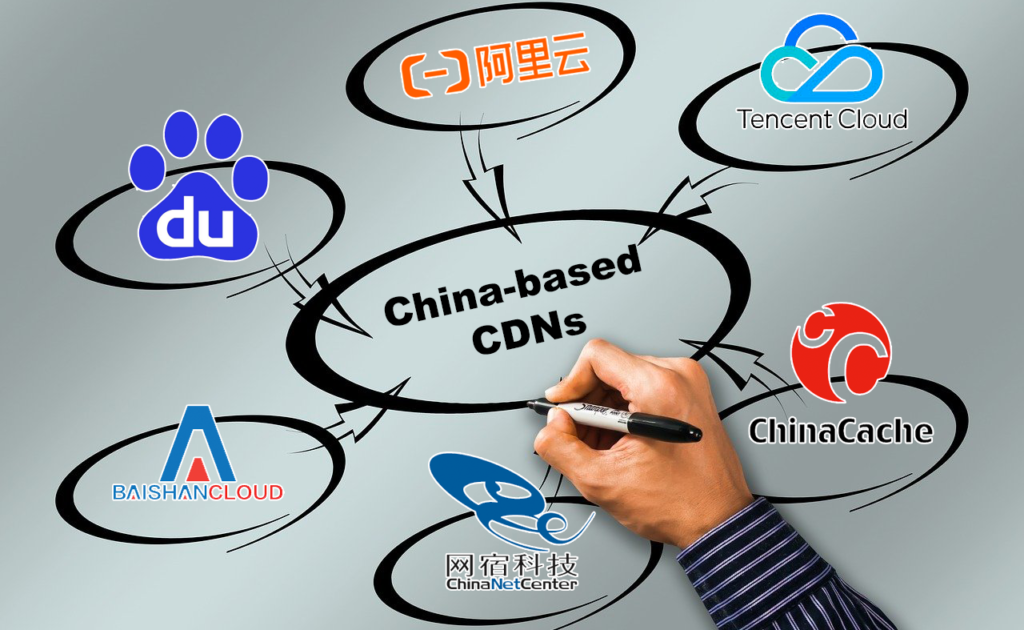
International CDN hosting is the most attractive option if you are a global business because it lets multiple national businesses operate a single website inside and outside China. Your visitors will not have to get the best VPN for China to use the site. There are different providers of China CDN solutions. It’s better to work with a global provider that has CDN nodes in China. With this service, you can apply for the ICP license when they set up the website for you.
The amount charged by China CDN providers varies from one to the other, with most starting at $0.10-0.20 per GB due to bandwidth licensing costs. The starting price will only get you basic packages plus hosting. It excludes the content management system and advanced features.
When looking for the best Chinese CDN solutions, you need to keep in mind tracking plugins like Google Fonts, Facebook Pixels, and Google AdWords. Various reports show that they reduce the speed of website loading in China or freeze loading altogether. Therefore, you may want to come up with other ways to track things without contravening Chinese laws.
2. Two websites – one for China and one for everywhere else
An option we have seen most businesses take, and which works out best, is to have two websites. One site that serves the Chinese market, and the other handles its international ventures.
This approach is appealing because optimizing your website for the local market often makes it less effective for international customers. China’s target audience usually prefers a different kind of experience and design that may not align with other customers.
Usually, Chinese customers prefer simple websites that typically feature a single landing page and QR code links to your sales team. You will have an easy time setting up such a microsite and even incur fewer expenses. That being said, modern Chinese websites (e.g., Tmall, JD.com) are quite complex, integrated with apps (WeChat, Douyin), and emphasize interactive features like live-stream shopping and what not.
Disclaimer
For businesses entering China, partnering with a local compliance expert is essential due to rapidly evolving regulations. Licensing requirements, hosting practices, and enforcement priorities can change with minimal notice. The information in this article is updated in 2025.
*** *** ***
Goclick China is a testing and monitoring service dedicated to mainland China. We offer synthetic, network, and real user tests. If you are a business overseas, and would like our help to monitor your application from within mainland China or need to optimize for this market,


